

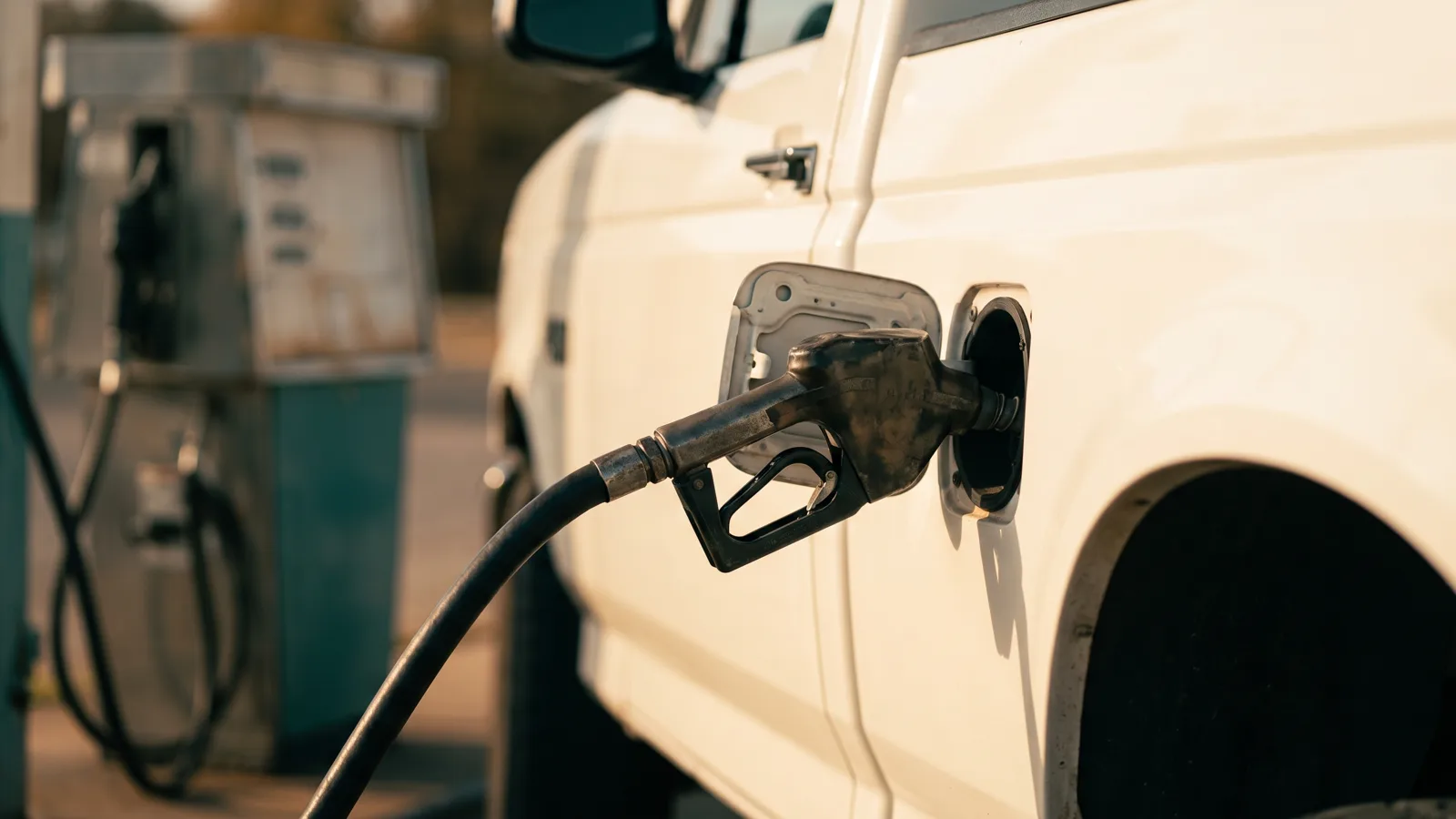
Starting 8 September 2026, the federal excise tax on gasoline returns to 10 cents per litre and on diesel to 4 cents per litre. From 20 April to 7 September 2026 both rates sat at $0.00/L under Bill C-30, so every truck, van and trailer in your fleet is about to fuel up under a different rate than it did last week. Here is what to do about it before your next invoice goes out and before your vehicle log turns into a mess.
Key takeaways
- From 8 September 2026, federal excise is 10 cents/L on gasoline and 4 cents/L on diesel, restored from the $0.00/L relief that ran 20 April to 7 September 2026 under Bill C-30 (Royal Assent 18 June 2026).
- A gasoline work truck burning 9,000 L a year faces an extra $900 in federal excise once the rate is back on for a full year, on top of HST that layers on the higher pump price.
- Your 2026 vehicle-expense records now cover two federal excise rates in one tax year, so your fuel receipts and per-kilometre calculations need to be split before 31 December.
- The excise change does not touch CCA rates, the small business deduction or personal-use benefit rules, but it does raise the dollar cost side of every fuel expense claim you file.
- Per-kilometre reasonable allowances you pay employees are set by the CRA and do not automatically reset with the excise change, so revisit your rate to see whether it still fairly covers fuel.
What changed on 8 September 2026
The federal Excise Tax Act sets a per-litre charge on gasoline, aviation gasoline, diesel and aviation fuel. Bill C-30, the Spring Economic Update 2026 Implementation Act (S.C. 2026, c. 22), temporarily set those rates to $0.00/L for the relief window. That window closed on 7 September 2026. The regular rates resume on 8 September 2026.
| Fuel | Before 20 April 2026 | 20 April to 7 September 2026 | From 8 September 2026 |
|---|---|---|---|
| Gasoline (federal excise) | 10 cents/L | $0.00/L | 10 cents/L |
| Diesel fuel (federal excise) | 4 cents/L | $0.00/L | 4 cents/L |
| Aviation gasoline | 10 cents/L | $0.00/L | 10 cents/L |
| Aviation fuel (turbine) | 4 cents/L | $0.00/L | 4 cents/L |
For the full statutory text, see the Excise Tax Act on the Justice Laws website. Provincial fuel tax, carbon pricing charges and HST layer on top of the federal rate and are billed separately at the pump.
A worked example: Oshawa framing contractor with two trucks
Consider a framing contractor based in Oshawa running two gasoline work trucks and a tandem trailer, driving job sites across Durham Region. Each truck runs about 30,000 km a year at 15 L/100 km, so 9,000 L per truck, or 18,000 L across the fleet. The trailer adds another 1,200 L of gasoline through the pickup that hauls it.
Total gasoline in 2026: 19,200 L.
Splitting that volume by day count in the year gives roughly: - 1 January to 19 April 2026 (109 days, 29.9%): about 5,741 L at 10 cents/L = $574 in federal excise. - 20 April to 7 September 2026 (141 days, 38.6%): about 7,411 L at $0.00/L = $0. - 8 September to 31 December 2026 (115 days, 31.5%): about 6,048 L at 10 cents/L = $605.
2026 federal excise total: about $1,179. In a normal full-price year the same fleet would pay about $1,920 in federal excise. HST at 13% still applies on the whole pump price, so the higher rate also raises the ITC amount you recover on that fuel.
That is a real number you can plug into your Q4 cash-flow forecast. If you also lease a diesel landscape truck burning 12,000 L a year, add another 4 cents/L for its 115 post-reset days, roughly $151 for Q4 alone.
Updating your CRA vehicle log for the split year
Your 2026 vehicle log now has to reflect two federal excise rates in one tax year. The CRA does not care whether you use an app or a paper booklet, but it does care that your fuel dollars line up with the receipts on file. Do these five things this week:
- Print or export your fuel receipts for the year to date and stack them in three date buckets: pre-20 April, 20 April to 7 September, and 8 September onward.
- Confirm the pump price on each receipt matches the rate window. If a station kept charging you the higher price during the relief window, you may have overpaid; that is a supplier issue, not a CRA one, and you claim the amount you actually paid.
- Re-check your business-use kilometres to date. The CRA still requires an odometer log, not an estimate, for either the actual-expense method or the reasonable-allowance method.
- Reforecast Q4 fuel dollars using the 10 cents/L (gas) or 4 cents/L (diesel) reset, so your working capital is not caught short in November.
- Revisit any per-kilometre allowance you pay employees or subcontractors. The CRA reasonable allowance rate is published annually; if it no longer covers real fuel cost after the reset, you can top it up as a taxable benefit or move to reimbursed actuals.
If your bookkeeping is already tight, the extra work is small. If your receipts live in a glove box, this is the week to fix that. Our bookkeeping and payroll team sees this exact split-year problem coming out of tax season every year.
How to price the change into your bids
For a Durham HVAC firm running 4 vans on gasoline, the annualised jump is roughly $3,600 in federal excise before HST and before any provincial fuel tax pass-through. On a 20-job-a-week route, that is about $3.50 in extra fuel cost per job. Options:
- Absorb it and take a margin hit. Manageable for one quarter; not sustainable if diesel prices also move.
- Add a per-visit fuel surcharge to new quotes. Common at $5 to $15 per call in Durham trades right now.
- Reprice hourly rates or per-square-foot bids at your next quarterly review. Best when your bids run 30+ days out.
- Tighten routing. A 5% cut in kilometres offsets most of the excise reset.
For construction and specialty trades, our construction industry page walks through the vehicle, tool and job-site deductions that pair with this fuel-cost reforecast.
FAQ
Do I need to file a special return because of the excise reset?
No. The federal excise on gasoline and diesel is paid by fuel producers and importers and shows up in the pump price. As a trades business you do not file a fuel excise return; you claim the fuel you paid for as a vehicle expense on your T2 or T1 self-employment schedule. Your job is to keep the receipts and log the business-use kilometres.
Can I claim HST on the higher fuel price?
Yes. HST at 13% in Ontario applies to the full pump price, including the restored federal excise. If your business is HST-registered, you claim the input tax credit on the whole receipt at the same rate you always have. Learn more about how our tax team handles ITC recoveries.
Does the reset change my capital cost allowance on the truck itself?
No. CCA on Class 10 or Class 10.1 vehicles is set by the Income Tax Act and is unrelated to the Excise Tax Act. The vehicle's cost, class and half-year rules are unchanged. Only the operating fuel cost side of your claim moves.
What if I paid the higher fuel price during the relief window?
The federal excise change was a producer-level statutory rate, so the pass-through to the pump depended on the seller. If your receipts show the higher pre-relief price during 20 April to 7 September 2026, that is between you and the retailer. For your tax claim, the amount you actually paid is what you deduct.
If you run trucks across Oshawa, Whitby, Ajax, Pickering, Clarington, Bowmanville or Uxbridge, the 8 September reset lands in your Q4 cash flow whether you plan for it or not. We help Durham Region trades owners split the year cleanly, keep the CRA-ready receipts trail, and price the higher fuel cost into upcoming bids. Book a free call and we will walk through your fleet numbers with you. Contact us today.
This article is for general information only and does not replace professional tax advice. Tax rules change, and your specific situation matters. Always confirm with a qualified CPA before making tax decisions.