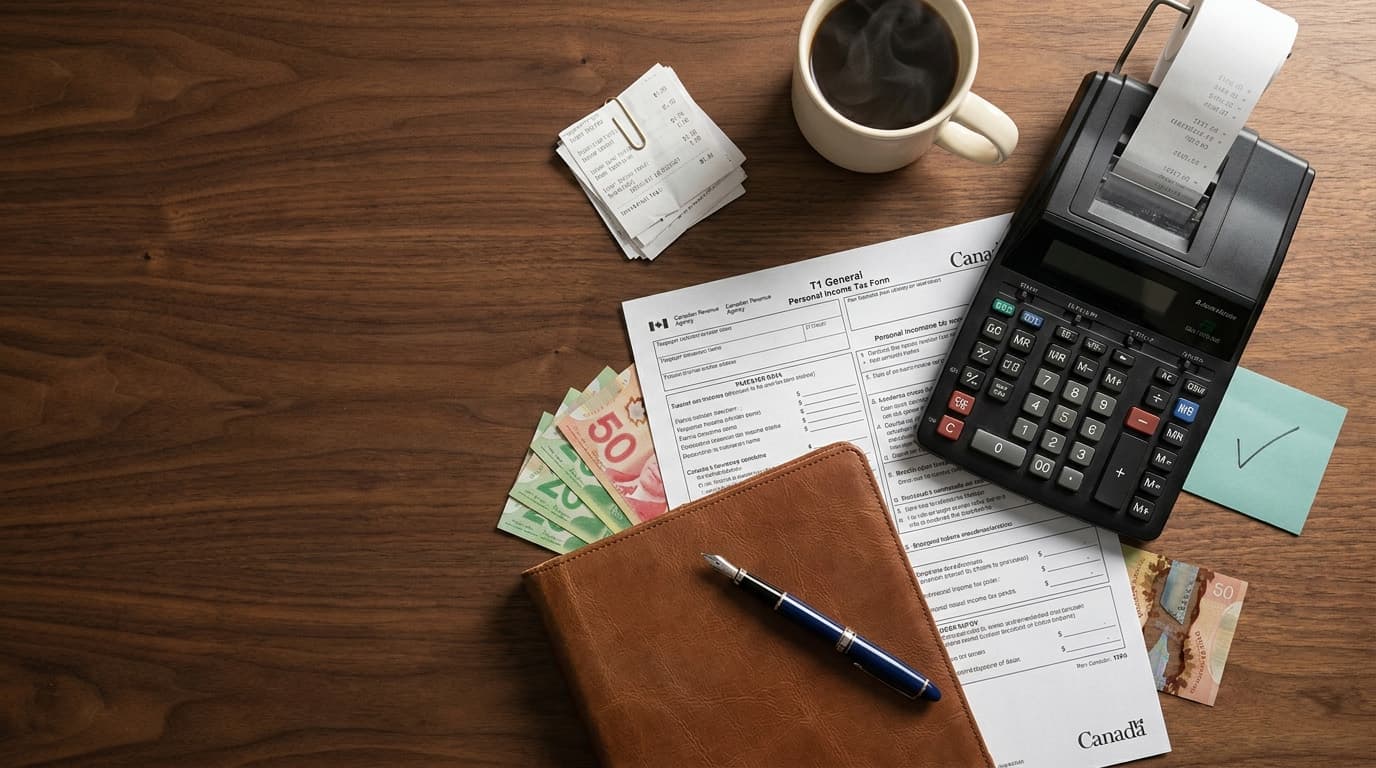


Two dates decide whether your corporation stays onside with the Canada Revenue Agency (CRA): the day you file and the day you pay. They are not the same date, and missing either one starts the clock on penalties and interest. If you run an incorporated business in Whitby, Oshawa or anywhere in Durham Region, here are the corporate tax deadlines that trip up the most business owners in 2026, and the rule behind each one.
Dates and rules below were confirmed against the Canada Revenue Agency in 2026. When a due date falls on a weekend or public holiday, it moves to the next business day.
Key takeaways
- Your T2 corporation income tax return is due six months after your fiscal year-end. A 31 December year-end means a 30 June filing deadline.
- Your balance of tax owing is due earlier: two months after year-end, or three months for eligible Canadian-controlled private corporations claiming the small business deduction. What you actually owe depends on the corporate tax rate in Canada that applies to your income.
- Most corporations pay tax by monthly instalments through the year. You can skip them only when total taxes payable are $3,000 or less.
- GST/HST for an annual filer is due three months after year-end. T4 and T5 slips are due the last day of February.
- Filing late triggers a 5% penalty plus 1% per month, and interest compounds daily at the CRA prescribed rate, 7% for the second quarter of 2026.
The corporate tax deadlines at a glance
Your due dates key off your fiscal year-end (your tax year-end), not 31 December and not the personal income tax season. Corporate tax filing deadlines are the part of the Canadian tax calendar owners miss most. The table below uses a 31 December year-end, since that is the most common one. Find your own tax year-end and count forward from there.
| Obligation | When it is due | 31 December year-end |
|---|---|---|
| T2 corporation income tax return (filing) | Six months after year-end | 30 June 2026 |
| Balance of tax owing | Two months after year-end (three for eligible CCPCs) | 2 March or 31 March 2026 |
| Corporate instalments | Monthly or quarterly through the year | Ongoing |
| GST/HST (annual filer) | Three months after year-end | 31 March 2026 |
| Payroll source deductions | 15th of the month after you pay wages | Monthly |
| T4 and T5 slips | Last day of February | 2 March 2026 |
When a due date falls on a weekend or a public holiday, it moves to the next business day. That is why the 28 February 2026 deadlines in the table land on Monday 2 March 2026.
Filing your T2: six months after year-end
Your corporate income tax runs on two clocks, and the deadline to file is the slower one. Every resident corporation has to file a T2 corporation income tax return within six months of its fiscal year-end. That is your corporate tax return deadline, and it applies even if the corporation was inactive or had no income tax to pay. A nil return is still a required return, and filing late can trigger a penalty whether or not you owe a cent.
The counting rule depends on your year-end. If your year-end is the last day of a month, the return is due the last day of the sixth month after. A 31 December year-end gives you a 30 June T2 filing deadline. If your year-end falls mid-month, say 15 August, the return is due the same calendar day six months later, on 15 February. Filing on time also starts the clock on the CRA's normal reassessment period, the window during which it can review your return. The CRA sets this out on its when to file your corporation income tax return page.
Paying your balance: two months, or three if you qualify
This is where owners trip up most. Corporate tax filing and payment run on different clocks, and the payment deadline comes first. Your balance of tax owing is due two months after the end of your tax year, four months before the return itself. For a 31 December year-end, that payment lands on 2 March 2026 while the T2 is not due until 30 June 2026.
Many Durham small businesses get an extra month to pay. The balance-due day moves to three months after year-end when all three of these are true for the tax year:
- The corporation was a Canadian-controlled private corporation (a CCPC) throughout the year.
- It claimed the small business deduction in the current or the previous year.
- Its taxable income for the previous year stayed within the business limit, counting any associated corporations together.
Meet all three and a 31 December year-end pushes your payment to 31 March 2026. Miss your balance-due day and arrears interest starts the next day, compounded daily at the CRA prescribed rate, which is 7% for the second quarter of 2026. The CRA explains the payment and instalment dates in full.
Instalment due dates through the year
Once your corporate income tax grows past pocket change, the CRA wants your tax payments during the year rather than in one lump at the end. You can skip instalments only when your total taxes payable are $3,000 or less in either the current or the previous year. Above that, you prepay. Most corporations make monthly instalment payments. An eligible small CCPC with a clean filing and payment record can pay quarterly instead, which eases cash flow for a seasonal business. Instalments that arrive short or late attract the same daily-compounded interest as a late balance.
GST/HST, payroll and information returns
Three more deadlines round out the corporate year:
- GST/HST: a corporation that files annually files and pays three months after its fiscal year-end, so 31 March 2026 for a 31 December year-end. Sole proprietors run on a different schedule, with their personal income tax returns due 15 June and the payment due 30 April, which we walk through in our June 15 self-employed guide.
- Payroll: when you pay yourself or your staff a salary, source deductions for CPP, EI and income tax are due by the 15th of the month after you pay the wages, for most small employers.
- Information returns: your T4 and T5 slips go to the CRA and to your recipients by the last day of February, so 2 March 2026 for the 2025 tax year. A T3 trust return, if you have one, runs on its own separate clock.
Interest and penalties on a late return
The late-filing penalty is 5% of the unpaid tax, plus 1% for every full month the return is late, up to 12 months. If the CRA had already demanded a return and charged you a penalty in one of the three previous years, the repeat penalty climbs to 10% plus 2% per month, up to 20 months. Interest on the unpaid balance compounds daily on top, so the interest and penalties grow with every month you wait to file.
Worked example
Picture an Oshawa CCPC with a 31 December year-end and $20,000 of tax owing that files four months late. The penalty is 5% of $20,000 ($1,000) plus 1% per month for four months ($800), so $1,800 before a dollar of interest. The same return filed on time would have cost nothing.
The CRA lists the full rules on its avoiding penalties page.
Where owners slip up
Two mistakes cause most of the damage. The first is treating the filing due date and the payment deadline as one date, then paying in June when the balance was due in March. The second catches new corporations: your first T2 is due six months after your first fiscal year-end, not six months after the day you incorporated, and that first year-end can be any date within 53 weeks of incorporation. Get those two straight and the rest is a calendar exercise.
Keep your corporate deadlines off your worry list
At EK CPA we keep incorporated businesses across Whitby, Oshawa, Ajax, Pickering and Clarington on schedule with year-round corporate tax support and tax planning, so no balance-due day or T2 deadline sneaks up on you. If you are not sure which dates apply to your tax year-end, book a call and we will map them out with you.
This article is for general information only and does not replace professional tax advice. Tax rules change, and your specific situation matters. Deadlines and rates were confirmed against the Canada Revenue Agency in 2026. Always confirm with a qualified CPA before making tax decisions.